Inside the Aviary at Le Manoir aux Quat’Saisons

Words by Belmond Editors
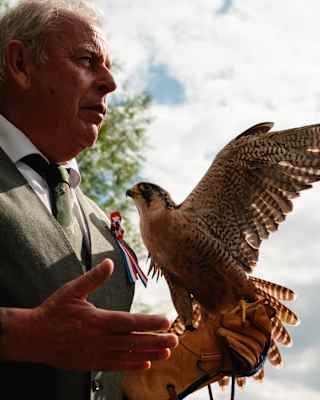
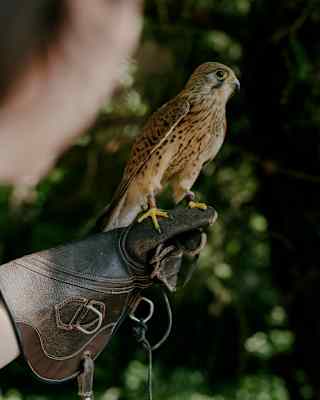
A pretty kestrel with a wide eye, soft brown feathers and yellow feet sits on a falconer's leather glove, seen close-up.

From meeting thrilling birds of prey to unforgettable conservation stories, come face to face with nature’s most fascinating hunters – and the passionate falconers dedicated to giving them a safe perch to soar from.
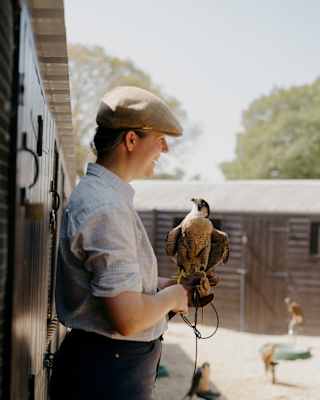
Hidden within the gardens of Le Manoir aux Quat’Saisons lives a remarkable cast of winged characters. Thunder, the raven, cackles with uncanny mimicry of his keeper Clive’s laugh, while Harry – a Harry Potter owl who had a starring role in the franchise’s fourth film – now unwinds in peaceful retirement. In the conversation below, we meet Ruth Ligget and Clive Jones, the two devoted falconers giving these birds of prey a second wind in the heart of the Oxfordshire countryside.

What does a normal morning look like for you at Le Manoir?

The birds are always our top priority, so as soon as we arrive on site, it's straight down to check on the team and give Thunder (the raven) his breakfast. Then, while they're sat out sunning themselves and getting their morning stretches done, we're busy sprucing up their bedrooms, refreshing baths and getting ourselves ready for flying. There are lures and treat pouches to load up, along with making sure that their trackers are charged up and checking each individual bird for their readiness to fly.

How do you train a bird of prey for guest interactions while ensuring their welfare and instincts are respected?

The first thing to keep in mind is that although every bird we use for public display in the UK is bred for this, they remain wild animals with minds of their own. As display falconers, our birds fly to a lure rather than live targets. Everything we do with our birds is tapping into their natural instincts – from the types of perching we use to the types of lures that we fly the falcons to. We are constantly watching and listening to what they tell us, and if they're not happy with the situation, then we will get them to somewhere they are!

We hear that you have a movie star in your midst...

Ruth: Having starred as a post office owl in Harry Potter and the Goblet of Fire, Harry (a Bengal Eagle Owl) ended up being a victim of extreme animal cruelty and was placed into Clive's care 18 years ago along with two other birds. Sadly, the other two have since passed from old age (Charlie the buzzard being just shy of 31), but Harry is still ticking along gently at 27 years old – the equivalent of about 160 for a person and some three times their wildlife expectancy. Although he has had experiences in the past and made the odd appearance on the croquet lawn at Le Manoir, the time has come for him to enjoy his retirement. Most of his day is now spent scowling at guests and posing for photographs on his favourite perch. When he isn't having a nap, that is!

Falconry has typically been a male-dominated field, but this is fast changing. What were your journeys into this career?

Clive: I started back in 1976, training on a falconry course in Gloucestershire with Phillip Glasier – one of the best known and top falconers in the world. It’s been part of my life ever since, through different careers and raising a family, before opening my own centre in 2012. Although male-dominated, a lot of the falconers I have trained have been women; at the end of the day, what matters most is that someone is willing to learn and cares about the birds.

Ruth: The short answer is that I followed Clive home from the pub. I was really lucky to bump into him while he was doing a show with birds in Oxford back in 2014, and it only took me the entire two hours he was there to work up the nerve to offer to clean birds out for free on Sundays. Clive kindly counter-offered with teaching me to fly them, and it has just steadily built from once a week to my career. Having an experienced mentor who is willing to share their experience and knowledge is absolutely priceless in this skill. Historically, women and men were just as likely to be involved in the art of falconry as it was a way of providing for the table. The oldest confirmed falconers' grave is of a female falconer, and one of the oldest written works in English on falconry is attributed to a female author. We've always been part of the story, and now we're helping to write the future of it too.

What is the process like for rehabilitating maltreated birds, how much of your work is split between conservation and handling experiences for guests?

Clive: Every time we have guests join us for an experience, or even just wander down to the mews to see the birds, conservation is worked in to the conversation. People protect what they know and can recognise; by being able to give people the opportunity to meet different species up close and personally, then we can at least give them a little familiarity with part of our natural heritage. Sometimes the conversations that are sparked through our work produces an immediate positive, response – we've had people leave us planning to put up nest boxes or downloaded Merlin (a free bird identification app) on to their phones to start getting to know the birds in their area.

Ruth: We're also proud that – with the freedom we have to choose which species we showcase and the good standing that Clive has in the falconry community – we are able to take on individual birds who would otherwise not be in as good a situation. These have ranged from ex-breeding birds who have ceased to lay, to RSPCA cruelty cases. Second-hand birds, whatever their background, need time and space to settle in and for their individual quirks to show though. We're able to give them that, and gaining their trust and confidence is the first step for any of the birds on our team, regardless of their background.

What species do you currently care for, and are there any you hope to introduce in the future?

Currently we have quite the selection, from a 4.5oz American Kestrel, up to a 4.5lb Eurasian Eagle Owl, with a range of falcons and hawks in between, and Thunder the Raven. In the future, we'll have to see what is available when the time comes, but both of us would love to have a Common Buzzard back in the team one day.

What advice would you give to young people, especially women, who are interested in entering this field?

Clive: It is more of a lifestyle, a great lifestyle, which is very rewarding personally. Don't expect regular days off, as on the night before, you’ll invariably have a bird decide they want to sleep elsewhere too and will spend the next day tracking them down!

Ruth: Find yourself a Clive! For anyone wanting to start on a falconry journey, educating yourself about the birds and the art of falconry, plus having someone with a wealth of experience and insight to support you is invaluable. I'm a member of the Female Falconers Club too, and they’ve been an encouraging addition to the social side of falconry too.

LE MANOIR AUX QUAT'SAISONS

BIRDS OF PREY EXPERIENCE

Try your hand at hawk handling in our picturesque grounds. Learn about these magnificent birds of prey with our expert handlers, admiring the Harris's hawks as they soar through the sky.

A bird soars above Le Manoir, seen at eye-level along a paved path flanked by lawn and shaped shrubs.

Delve deeper into

You might also enjoy