Splendido: The Radiant Stage of Portofino

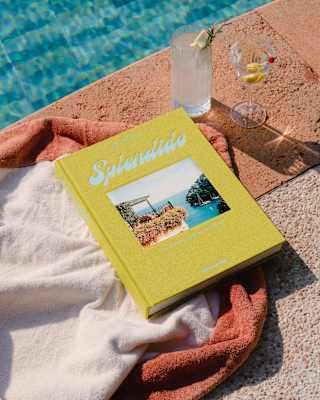
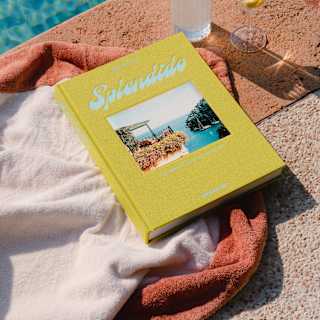
For the new Belmond Assouline travel book, British journalist Matthew Bell dives into the history of Splendido to tell us the tales of the gem of the Italian Riviera. The hotel, which has entered a new chapter on the radiant stage of Portofino after a painstaking renovation, transforms into a mythical legend in the new Assouline travel book – discover an excerpt from the guide and read about the secret stories behind the iconic destination.
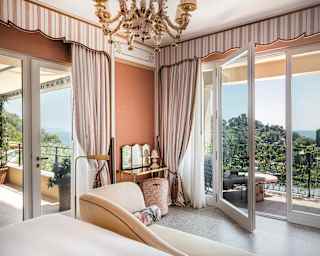
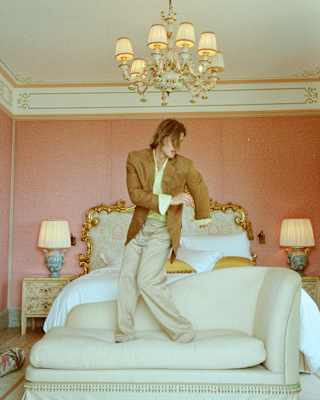
The secret to a truly great hotel is that it is a world of its own. Somewhere removed from the everyday – a place to escape to not only for a holiday but also in one’s mind, to dream of long before and after you visit. Few places in Italy do this quite so well as Splendido in Portofino, a hotel so famous that even those who have never been immediately have an idea of what it must be like. Grand and opulent, yes, but also impossibly glamorous, a place where beauty in all its forms – human, natural, and man-made – coexist in a bubble suspended in time. A stage upon which la dolce vita can be lived.
But how does a mythical creature like Splendido come to be born? In some ways, this is not a question one should ask. Better just to accept that magic does sometimes happen without delving too deep into the how's and why’s. And yet, for pursuers of beauty, for those who seek to attain perfection, it is useful to consider what ingredients came together to create such alchemy, to dive into the backstory of an entity we have grown so much to love. Now is a good moment to do so, as the hotel enters a new chapter in its life after the most comprehensive renovation in its history, and after adding the equally ravishing private residence Villa Beatrice to its gardens, not to mention the nearby Splendido Mare, a charming fourteen-room seaside guesthouse on Portofino’s Piazzetta.


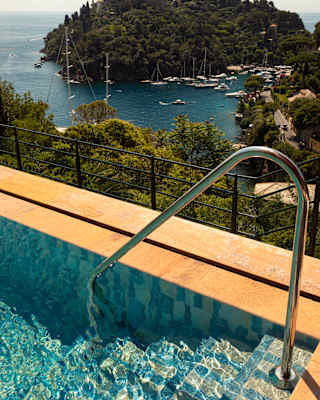
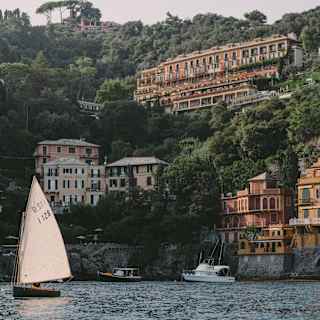
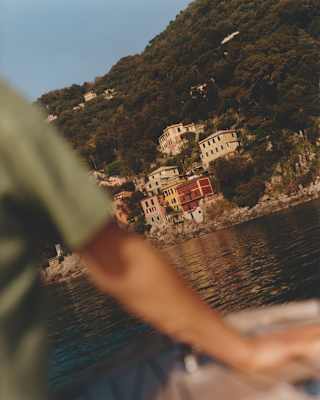
Let us first consider the location: Portofino, the most picture-perfect fishing village in Italy, the tiny jewel of the Ligurian coast that sparkles so brightly. This is thanks to its unique topography, tucked away in a fold of dramatic hills between steep chestnut woods and dazzling blue-green water. There is something of the divine in these hills, which have always been populated by monks and pilgrims as much as by shepherds and lace-makers.
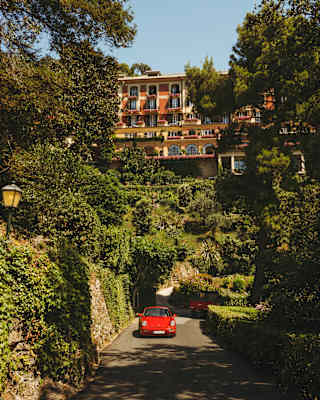
Indeed, it was an order of Benedictine monks who first staked out the foundations for what would become Splendido, halfway up a south-facing hill above the Bay of Cannone, in the sixteenth century. We tend to think of monks as an ascetic lot, retreating from the world to live a life of chastity and abstinence. And yet so often they managed to contrive an extremely nice life for themselves, as they did in Portofino: their four-story monastery enjoyed magnificent views and all-day sunlight, with abundant gardens set amid vineyards and olive groves. The location was possibly a little too good, in fact, as they found themselves frequently besieged by Saracen pirates and, after one looting too many, were eventually forced to abandon the building to the goats who roam the hillside. It was in this sorry state that the property was discovered and bought in the late nineteenth century by a Genovese nobleman, Barone Giacomo Baratta, who was well known throughout Liguria and especially Portofino, where he was a major landowner.
At that time, the only way to reach Portofino was by foot or mule along a steep path, or by sea. The road that winds round the coast from Santa Margherita Ligure would not be built until 1890, but as soon as that happened, Portofino’s fortunes were immediately changed, as it transformed into the perfect place for rich businessmen such as Baratta to have a summer residence. Which is what Splendido, then known as the Villa Baratta, became.
Portofino had by now become a destination for adventurous English and German tourists who liked to explore the Italian Riviera aboard sailing yachts. Others took advantage of the new railway network, which by 1856 had connected Genoa with Voltri, followed by numerous extensions as part of the unification of Italy, with the aim of linking Modena to Nice. But until the turn of the twentieth century, Portofino remained cut-off, and hotels were necessarily somewhat simple. All that changed with the building of the road, a project of vast expense and skilled engineering, which suddenly allowed visitors to arrive from the railway station at Santa Margherita by pony and trap—and for luxury supplies to be brought in.
Born in 1854, Ruggero Valentini was there to witness the transformation of Portofino from hidden fishing village to popular tourist attraction. His daughter, Valentina, is said to have been the one who first had the idea to turn the Villa Baratta into a luxury hotel, which her father duly did. Having acquired the building, he spent a year equipping it with all the latest amenities befitting a luxury hotel of the Belle Époque, as established by that pioneer hotelier of the age, César Ritz: electric lighting, hot and cold running water, and a lift to connect all five floors. In the spirit of the Hotel Ritz in Paris, which had opened in 1898, Valentini gave his new hotel a French-sounding name upon opening in 1902, christening it the Hotel Splendide. Two decades later the hotel was given its more appropriate Italian name: Splendido.


The hotel was an instant success, largely thanks to the then highly regarded London travel agent Thomas Cook, who enthusiastically endorsed it to his well-heeled clients from Britain and America. At that time, the tourism season began at the end of the summer, when Northern Europeans headed south to escape the brutal winters. Part of what made Splendido such a hit was its south-facing location, which meant that, according to Valentina, the temperature there was often at least five degrees warmer than the rest of Portofino throughout the cooler months. After Ruggero Valentini died in 1908, aged only fifty-four, Valentina took over running the hotel until her death in 1968. Both are buried in the cemetery of Portofino behind the Church of San Giorgio, where a stone tablet states that Ruggero was “the pioneer of tourism at Portofino.”
The above is an abridged extract from “Portofino: The Radiant Stage of Portofino” © 2025 Assouline Publishing, Matthew Bell. Purchase the full text here.
Delve deeper into
You might also enjoy

Peru: An Odyssey Across a Time-Honoured Land
In this extract from “Peru: An Odyssey Across a Time-Honoured Land,” a new book published by Assouline in collaboration with Belmond, journalist Catherine Contreras reveals a Peru travel guide, inviting readers to explore one of the planet’s most captivating destinations and showcasing the beauty of the locations where Belmond’s hotels and trains are found throughout Peru.

Go with the Slow: The Rise of Train Travel
Belmond continues to shape the future of luxury train travel, marked this year by the arrival of the Britannic Explorer, the first train of its kind in England and Wales. Monisha Rajesh – author of four travel books including ‘Moonlight Express: Around the World by Night Train’ – discovers why slow travel is having a resurgence.

Quite the Site: Luxury Travel to UNESCO World Wonders
As proud custodians of historic properties near cultural and natural wonders, Belmond’s hotels and trains are the perfect choice for travellers with a historical hankering. Whether you’re marvelling at the ingenuity of the ancient Romans in Britain or the wonders of the Mayas in Mexico, our properties are your gateway to the past.

Belmond Legends: Copacabana Palace
Welcome to Copa, the legendary stage for the most glamorous encounters and iconic revellers. This is the place where Rio entertains and enchants. The place where Rio starts.

La Samanna: The Sanctuary of St. Martin
Perched above Baie Longue, La Samanna is a place where elegance and tranquillity mingle in perfect harmony. Step inside our legendary hotel, in the heart of Terres Basses.

In the Dog House
Finding the perfect luxury hotel that is dog-friendly can be a ruff task. Discover the Belmond hotels that allow pets and their stylish globetrotting owners, from pet-friendly hotels in Italy to luxurious doggy havens in the English countryside.

Homegrown Heritage
Stepping aboard British Pullman offers a rare opportunity to immerse yourself in the golden age of travel. On this historic train, discover the work of British craftsmen creating luxury train travel for the 21st century.