The Artisans Reimagining Florence’s Finest Hotel

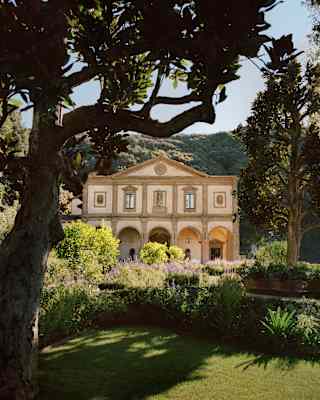
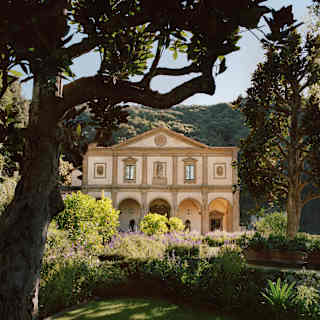
Italy’s ultimate retreat and Renaissance haven, Villa San Michele occupies a privileged perch on the hills overlooking Florence. Set within the original monastery and gardens, every space is designed to deepen the connection to Florence’s breathtaking landscape and rich culture. Discover the artisans reviving this Renaissance legend, reopening in Spring 2026 after a complete renovation.
1 / 5
Luigi Fragola Architects
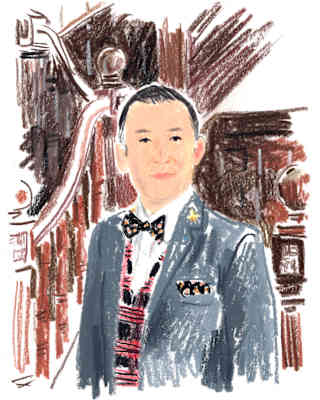
Villa San Michele’s transformation was led by Luigi Fragola Architects, who reimagined the enduring beauty of the property – each space conceived to deepen the connection with Tuscany’s landscapes, its craftsmanship and the soul of Florence itself.
Leading the villa’s reimagination, Luigi worked closely with materials, textiles and details that define its new spirit. Every element, from exquisite design pieces to curated collectibles and rare artifacts, was chosen with deep respect for the villa’s architecture and history, offering guests an authentic experience within our Tuscan luxury retreat, rooted in peace and beauty.

2 / 5
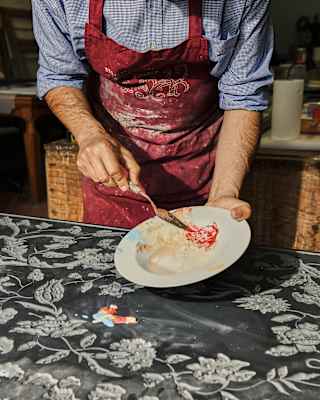
Scagliola by Bianco Bianchi
Scagliola – created through layers of plaster and pigments that are carefully mixed, molded and polished – achieves remarkable depth and lifelike textures through patient artistry. In the late 1940s, artist and painter Bianco Bianchi devoted nearly a decade to rediscovering the lost art of scagliola, and by the 1950s, he had opened his first workshop, reviving this centuries-old craft.
Rooted in ancient techniques, the legacy of Bianco Bianchi lives on at Villa San Michele. New generations of Bianco Bianchi’s family continue the workshop and have shaped the tabletops of our Florence luxury hotel, carrying forward a tradition that bridges history and contemporary elegance.

3 / 5
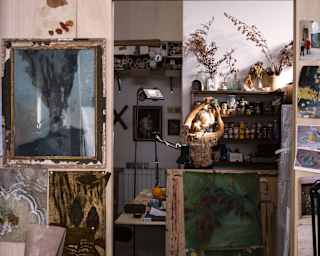
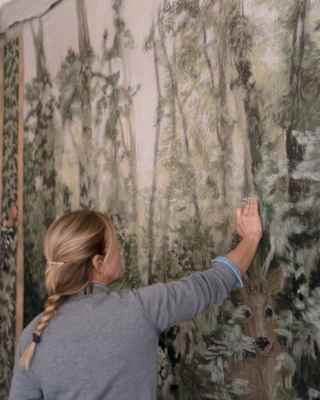
Art by Elena Carozzi
Visual artist Elena Carozzi’s practice bridges deep material knowledge and ancient techniques, covering wallpaper, ceramics and embroidered fabrics. Her artistic language emerges from a quiet dialogue with everyday rituals, domestic objects and an intimate immersion in nature, forming a layered, timeless archive of visions.
Elena’s research takes tangible form in meticulously crafted tapestries for the reimagined rooms and suites at Villa San Michele, and in enchanting frescoes depicting bucolic landscapes, with Florence gently appearing in the distance.

4 / 5
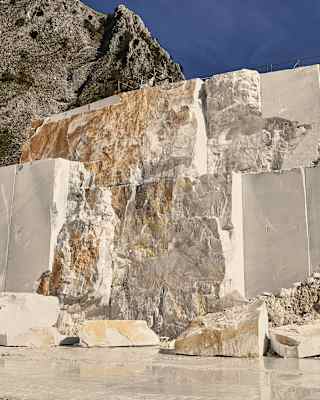
Marble from the Caves of Carrara
Marble from the caves of Carrara – specifically Cipollino and Tuscan Carrara – was carefully sourced from the Apuan Alps, where each block was extracted to preserve its natural veining and texture. Paired with neoclassical tapestries and antique furnishings, this marble has been shaped into double vanities, walk-in showers and freestanding bathtubs for the hotel; these materials forming a seamless dialogue between the villa’s historic character and its contemporary reinterpretation.

5 / 5
Textiles by Rubelli
Villa San Michele’s new chapter celebrates the mastery of artisans shaping its renewed identity. With Rubelli – one of Italy’s most storied textile houses, renowned for centuries of silk production and uncompromising craftsmanship – the ancient magic of weaving comes to life once more. In Rubelli’s historic workshop, the rhythmic sound of looms transformed hand-drawn and digital designs into refined, richly textured fabrics.
Coveted for their depth, durability and artistry, these luxurious textiles are woven seamlessly into the Villa’s restoration, continuing a legacy of excellence that elevates the spaces with cultural resonance.

VILLA SAN MICHELE
A work of art inside and out with a history tracing back to the 15th century, Villa San Michele is a Renaissance villa in Florence that immerses you into the romance of Italy.

Delve deeper into
You might also enjoy

An Art & Design Lover’s Guide to Rio de Janeiro
From the tiled steps of Escadaria Selarón to hillside ateliers and bay-front museums, Rio de Janeiro is a city where modernism, music and tropical landscape collide. Discover Darcie Imbert’s guide to the artistic metropolis, featuring iconic works by Oscar Niemeyer and Roberto Burle Marx.

Holy Mountain
Mountains are an incredibly important symbol in Incan history and Andean culture — both geographically and culturally. Join us as we climb through the history of the Andean mountains, learning how indigenous people are maintaining ties to their natural and spiritual surroundings.

Celia, the British Pullman Carriage by Baz Luhrmann & Catherine Martin
Drawing inspiration from a broad sweep of theatrical history – from Shakespeare to Laurence Olivier – director Baz Luhrmann and cinematic designer Catherine Martin have created a dazzling new private dining carriage for the British Pullman. Here, we explore the story, process and craft behind the carriage Celia.

How 500 Brushstrokes Become One
“Human encounters are truly magical.” In an era shaped by artificial intelligence and rapid technological change, this reflection by Chinese artist Wu Jian’an feels quietly radical. It also serves as the emotional core of 500 Brushstrokes in Peru, his ambitious travelogue and participatory art project, soon to be exhibited at Art SG Singapore.

Belmond’s 2026 Culture Calendar
With our properties situated across some of the world’s most culturally rich destinations, our 2026 calendar highlights must-see music festivals, art fairs and luxury travel experiences around the globe.

How Wes Anderson Redesigned Our Train
Travel in a vintage train carriage designed by pioneering film director Wes Anderson, director of new film The Phoenician's Scheme, on your next visit to the United Kingdom.

And The Winner Is…
The Belmond Photographic Residency, now in its second year, has crowned a new winner. Meet Tara L. C. Sood and her award-winning submission.