The Cinema of Sicily

With its mix of bucolic villages and bustling cities, Sicily has often found itself in front of the camera’s gaze. As the Taormina Film Festival celebrates its 70th edition, we take a whistle-stop tour to discover the island’s celluloid offerings.
Stromboli (1950)
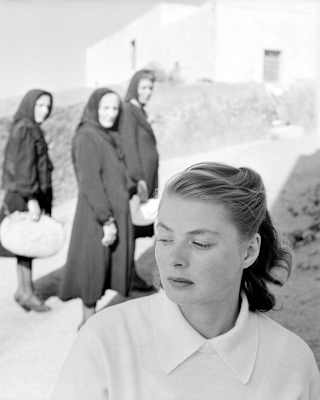
A delicate Ingrid Bergman struggles to assimilate to the wild landscape in Roberto Rossellini’s Stromboli, which takes its name from the volcanic island a stone’s throw north of Sicily. A classic of Italian neorealist cinema, it also provides a glance into the rural fishing communities of 1950s Sicily – though the camera is more in love with Bergman’s face above anything else (fitting, considering the scandalous love affair between Rossellini and Bergman that began during filming).
The Godfather Trilogy (1972, 1974, 1990)
“In Sicily, women are more dangerous than shotguns.” Al Pacino’s Michael Corleone doesn’t heed this warning when he falls in love with local beauty Apollonia in the first instalment of The Godfather, and he pays the price. Whether it’s to visit the San Nicolò church – the location of his doomed wedding – or Bar Vitelli, where he first enquires about her (still famed today for its lemon granita), Savoca in Sicily is a mecca for fans of Francis Ford Coppola’s mafia movie. Beyond the walls of this historic town, scenes from the three films were shot all over the island – from Acireale to Palermo, Messina, Catania and beyond. Leave the gun, take the cannoli.
Il Gattopardo (1963)
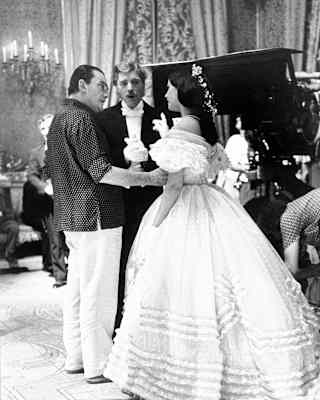
Known for his large-scale epics about the moral decay of Italian aristocracy, Luchino Visconti’s Il Gattopardo sees its characters grapple with political upheaval in the mid-19th century as Sicily as they know it crumbles around them. Burt Lancaster, Alain Delon and Claudia Cardinale are the taffeta-and-organza-laden actors caught in the middle. While it was considered controversial at the time for the way it depicted the Risorgimento period of Italian history, today – with its sweeping, intoxicating production design – it's considered by many to be a classic.

L’avventura (1968)
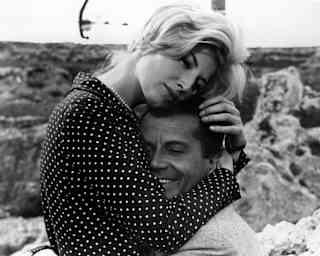
Season 2 of the hit HBO show The White Lotus was set in Taormina, and series creator Mike White was so taken by acting legend Monica Vitti’s most famous film, L’avventura, that he featured a shot-by-shot homage in the series, with Aubrey Plaza’s character also walking under the steps of Noto Cathedral. Vitti, known for her heavy-lidded, commanding gaze, was the muse of director Michelangelo Antonioni, and L’avventura is often considered her best work – a strikingly melancholic mystery film about a missing woman, and the ennui-laden search to find her.
Cinema Paradiso (1988)
A sentimental ode to the power of cinemagoing, Cinema Paradiso won the Academy Award for Best Foreign-Language Film in 1989 and is still one of the most beloved Italian films today. Shot in Bagheria and Cefalù on the northern coast of Sicily, it is shown largely in flashback as a jaded adult reflects on his childhood growing up in a small Sicilian town, where his only source of joy is the local picture house. It’s best remembered today for its epic music score by the Italian maestro, Ennio Morricone.
The Day of the Owl (1968)
With her mesmerising, kohl-ringed eyes, Claudia Cardinale is one of Italy’s most beloved cultural exports. She may have made over 100 films, but The Day of the Owl captured her captivating beauty the best. The film is a leading example of the poliziotteschi Italian crime film movement of the late 1960s and is set in a small Sicilian town where a police chief is investigating a murder, only to have his efforts frustrated by the presence of the mafia and the culture of silence. Filmed in Partinico, art soon began imitating life on set, as the production team were intimidated with threats during filming – thought to be sent as a result of the film’s intimation that the Italian government were in cahoots with the mafioso.

Divorce Italian Style (1961)
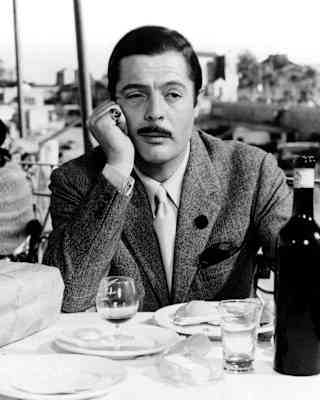
An impish Marcello Mastroianni lit up the screen in this frothy black comedy about a man who, despondent that divorce is illegal, gets creative in imagining a series of extreme ways to do away with his wife. Poking fun at the stereotypes of the fickle adulterer and slyly sending up old-world Sicilian morals, director Pietro Germi selected picturesque Ispica in the south of the island to set the action, making use of its stunning Baroque architecture and sloping scenery.
The Seduction of Mimi (1972)
Lina Wertmüller was a rare example of a woman flourishing within a predominantly male filmmaking sphere in the 1970s, and she made history being the first woman – of any nationality – to be nominated for the Academy Award for Best Director. The Seduction of Mimi, which follows the trials and tribulations of a Sicilian labourer, is considered one of her finest works. It was filmed in Catania and provides a compelling tour of the city, from the Piazza Ognina to Monastery of San Nicolò l'Arena and the historic Via dei Crociferi.
SICILY CINEMA TOUR
Embark on a movie-themed driving tour to discover locations that have lit up the big screen with Villa Sant’Andrea, A Belmond Hotel. Head to the UNESCO World Heritage Site of Ragusa, the town that saw Marcello Mastroianni acting up in the classic comedy 'Divorce Italian Style'.
Add a decadent twist by combining your tour with a visit to Bonajuto, Modica’s famous artisan chocolate factory. Sample opulent Aztec-style confectionery blended with local ingredients such as pistachios, citrus fruits and chilli. End the day by relaxing over a sunset cocktail or dinner by the sea in Marzamemi, the romantic fishing village where Gabriele Salvatores shot his 1993 drama, 'Sud'. Or follow in the footsteps of Inspector Montalbano, the famous Sicilian sleuth created by writer Andrea Camilleri.

Delve deeper into
You might also enjoy

And The Winner Is…
The Belmond Photographic Residency, now in its second year, has crowned a new winner. Meet Tara L. C. Sood and her award-winning submission.

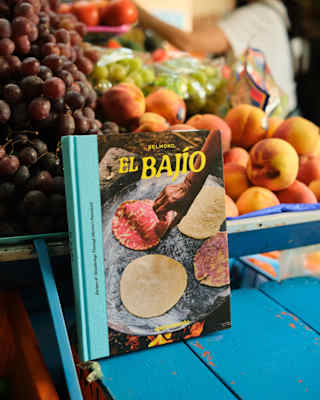
Eat Your Way Through El Bajío
Discover ‘El Bajío: Recipes & Wanderings Through Mexico’s Heartland,’ the fourth cookbook in the collaborative series between Belmond and Apartamento.

JR on the Making of L’Observatoire
The renowned French artist JR challenges traditions and sparks dialogue with his monumental artistic creations. Turning his eye to the iconic Venice Simplon-Orient-Express where he's designed an entire carriage onboard, the L’Observatoire is an artwork in motion. Transforming every detail into an opportunity for introspection and adventure, read JR in his own words as he explores the deeper meaning behind his most ambitious project yet.

How Wes Anderson Redesigned Our Train
Travel in a vintage train carriage designed by pioneering film director Wes Anderson, director of new film The Phoenician's Scheme, on your next visit to the United Kingdom.

Castello di Casole, As Seen by Cecy Young
The latest in Belmond’s ‘As Seen By’ photography series sees Cecy Young discover a sense of home in the sprawling hills of the Tuscan countryside.

Discover Belmond’s Photobooks
Inspired by Belmond’s one-of-a-kind hotels and destinations, ‘As Seen By’ is an collection of collectible photobooks with Parisian publisher RVB.

Luchino Visconti’s Tuscany
In the 1960s, Castello di Casole in Tuscany was a playground for one of the Italian film industry’s biggest disruptors. Film writer and historian Christina Newland, programmer of ‘Luchino Visconti: Decadence & Decay’ at the British Film Institute, explores the story of the Visconti brothers – their legendary parties, the glittering guestlists and the bar that honours them today.