Carriages
From royal journeys to silver-screen appearances, our lovingly restored 1920s train has a story to tell. Step aboard Audrey, Vera, Minerva and more, each whimsically named carriage offering its own distinctive character and a glimpse into a bygone era.
Celia
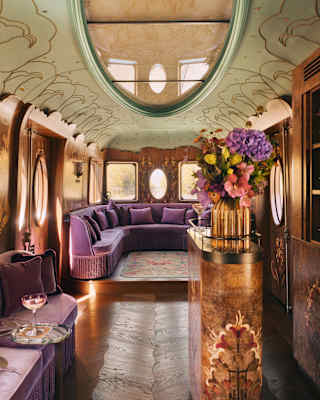
Set within an original 1932 Pullman car, Celia is our stunning carriage designed by Baz Luhrmann and Catherine Martin. She features a personal cocktail bar, lounge, private dining and entertainment area, offering up to 12 guests the most intimate way to experience one of Britain’s most storied trains, and the chance to create bespoke events.
Browse our unique railway journeys and book Celia for your ultimate celebrations.
Use arrow keys or pagination buttons to navigate between images in this carousel
Cygnus
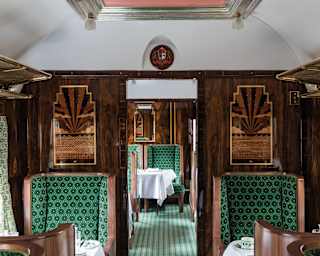
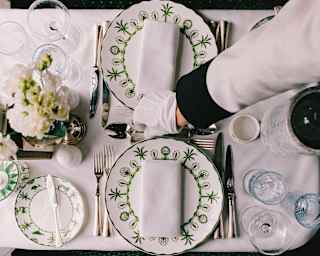
This stunning carriage was first used in 1951, often reserved for royalty and visiting Heads of State. In 2021, Cygnus was reimagined by filmmaker Wes Anderson, with a refreshing look featuring a deep emerald-green palette.
Use arrow keys or pagination buttons to navigate between images in this carousel
Audrey
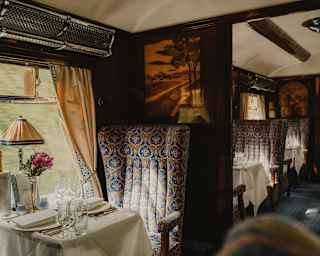
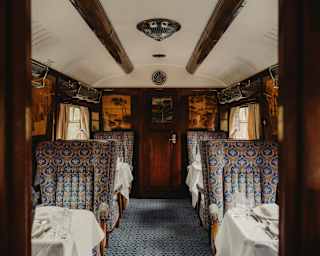
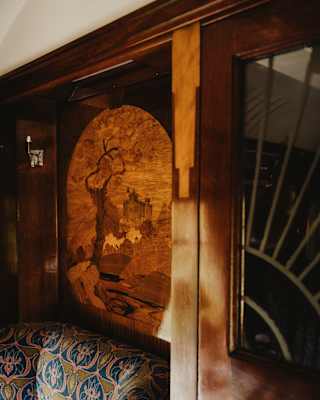
With vintage lighting and an antique-style marquetry, British Pullman’s Audrey carriage has a story to tell – aptly carved into the marquetry on the walls.
Use arrow keys or pagination buttons to navigate between images in this carousel
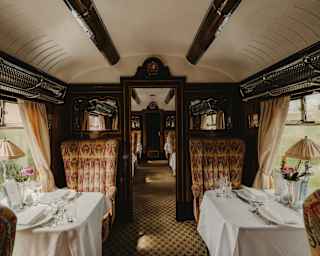
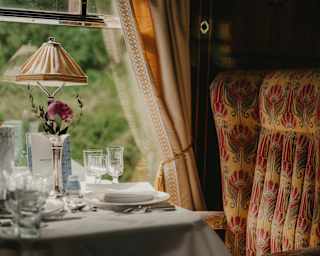
Gwen
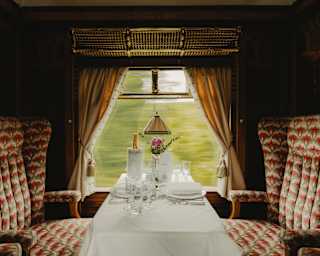
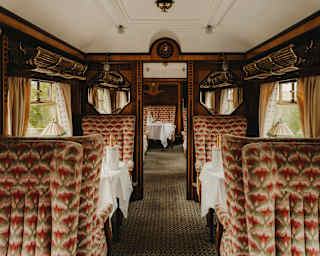
The Gwen carriage was first used in 1948 to transport Queen Elizabeth II to Brighton. With its contrasting beige and red cosy chairs, this car brings out the perfect vintage flair to any British Pullman journey.
Use arrow keys or pagination buttons to navigate between images in this carousel
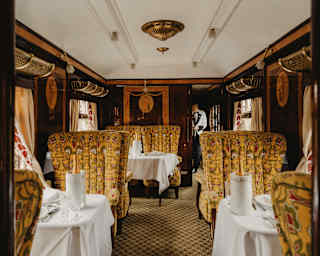
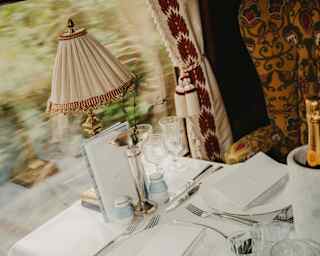
Ibis
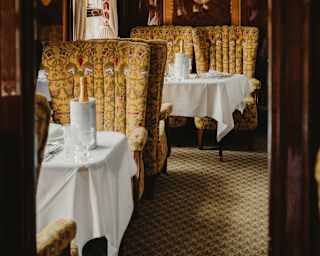
With its warm gold tones and wood details, Ibis is one of the most captivating British Pullman carriages. Built in 1925, it has served many historic trains throughout Europe, from La Compagnie Internationale des Wagons-Lits et des Grands Express Européens to the Golden Arrow, in Sussex.
Use arrow keys or pagination buttons to navigate between images in this carousel
Ione
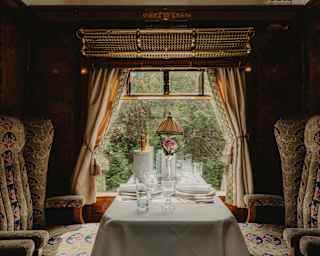
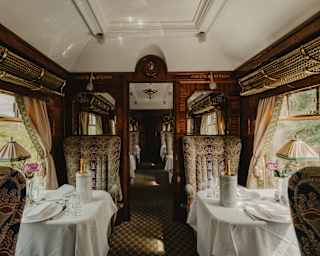
Built in 1928, Ione first served as a restaurant carriage on many train services across the UK. Take a seat around one of its beautifully laid tables or book the British Pullman private coupe for four, for an exclusive ride back to old glamour.
Use arrow keys or pagination buttons to navigate between images in this carousel
Minerva
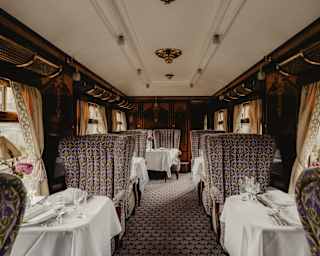
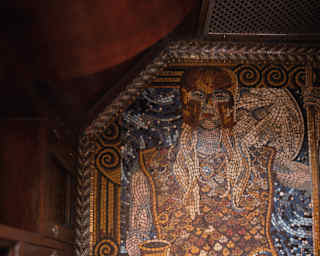
With a signature Edwardian marquetry, Minerva makes a particularly refined car – fitting for a luxury British Pullman carriage that transported visitors for the 1953 Coronation of Queen Elizabeth II, and later to the Coronation Derby.
Use arrow keys or pagination buttons to navigate between images in this carousel
Perseus
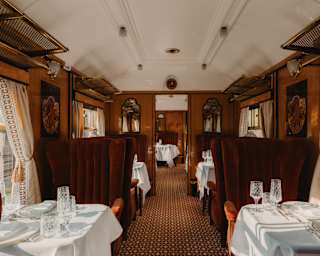
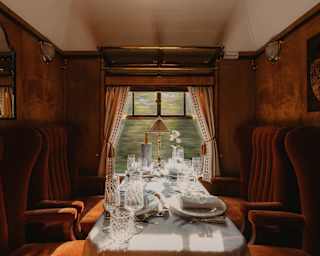
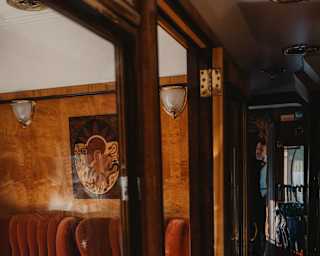
Designed in the 1930s, Perseus wasn’t completed until 1951. Offering 26 seats, including two British Pullman private coupes for four, this grand carriage formed part of Winston Churchill’s funeral train in 1965. Book one of its seats to marvel at the stunning Australian walnut-woodpanels and Art Deco details.
Use arrow keys or pagination buttons to navigate between images in this carousel
Phoenix
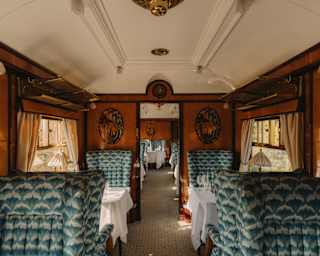
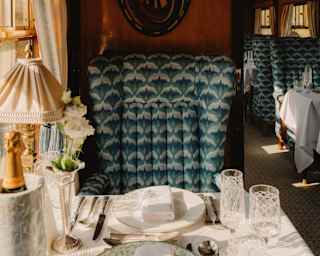
Phoenix has a story as fiery as its name. Originally known as Rainbow, the carriage rose from the ashes after a tragic fire in 1936. And after being rebuilt, it became the late Queen’s favourite carriage, symbolising resilience and elegance.
Use arrow keys or pagination buttons to navigate between images in this carousel
Vera
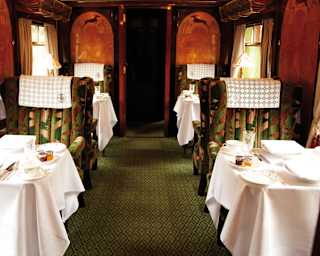
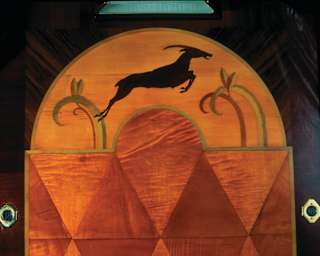
After being hit by an air raid during World War II, this carriage was extensively repaired, quickly rejoining the railway in 1947. Vera hosted Prince Charles and Princess Ann’s first trip on an electric train, in 1954.
Use arrow keys or pagination buttons to navigate between images in this carousel
Zena
Zena was built in 1928. After the war, the carriage joined the Queen of Scots and Yorkshire Pullman trains until 1955, and then the Golden Arrow until 1960.
Use arrow keys or pagination buttons to navigate between images in this carousel