Tourists who love what was once called Mitteleuropa, that endless expanse of kingdoms, empires and republics in the center of the Old Continent, may want to pack a classic literary travelogue in their suitcase: Italian Journey by Johann Wolfgang von Goethe, a chronicle of the German author’s travels through Italy from 1786 to 1788. Don’t be intimidated by its five hundred pages divided into three volumes; treat them as you would a chat with a friend on WhatsApp, to be read before going on excursions. Climb, with Goethe, up Mount Pellegrino, “the most beautiful promontory in the world,” but remember to look up because “those who have seen the sky of Palermo once will never be able to forget it.”
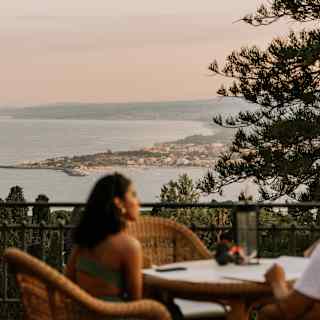
On the east coast, in Taormina—a dream destination for generations of travelers—we can listen to Goethe discuss the Teatro Greco, or Greek Theater: “Seated where the spectators used to sit, in the highest part, we are inclined to think that a theater audience has never seen things more beautiful before its eyes. To the right, on the highest rocks, stand castles, below is the city, and although these edifices were built recently, it seems as if they were already there in antiquity.”
Those who stop for the night at the Grand Hotel Timeo, A Belmond Hotel, Taormina, will relive Goethe’s dazzling panorama with their own eyes, and not miss a single frame. The past returns in the future and becomes vivid emotion. The eccentric American writer Truman Capote was so enchanted that he stayed here for two years. D. H. Lawrence scandalized the austere society of the post–World War I period when he wrote about the sensual passions of Lady Chatterley. Lady Florence Trevelyan, rumored to have been exiled by Queen Victoria for her scandalous behavior, was able to live freely in Taormina. And Tennessee Williams honed his lyrical style of writing here.
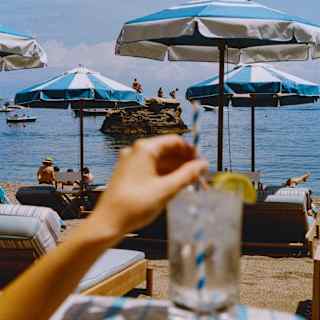
At Villa Sant’Andrea, you can walk along the shore or swim in the blue waters toward Isola Bella, where swordfish and bluefish dart around before ending up on the grill of Oliviero restaurant. Here, history and nature meet, taking you from the Italian unification movement, spearheaded by Giuseppe Garibaldi, to the days of world war, and the dolce vita years of Hollywood and its Roman equivalent, Cinecittà, with the presence of stars such as Greta Garbo, Elizabeth Taylor, Richard Burton, Virna Lisi, Audrey Hepburn, Rex Harrison and Burt Lancaster and, later, a new era that included Nicole Kidman, Willem Dafoe, Francis Ford Coppola, Al Pacino and Robert De Niro.