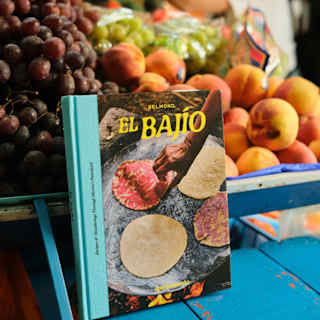
The road into El Bajío never repeats itself. You might be driving up from Mexico City, watching the sprawl fall away as the air dries, and the hills gather into long, folding lines. Or you land in León, blinking into the white light of midday, and suddenly the scent of leather, guava, diesel and tortillas tells you you’ve arrived. Though, in truth, you were probably already there – awareness of arrival in El Bajío tends to happen after the fact, like getting the joke just as the room has gone quiet again. El Bajío is hard to pin down. Geographers say it’s a basin – ‘el bajío’, the lowlands between mountain ranges. What holds El Bajío together isn’t a map, it’s probably a tone. A temperament.
Here, recipes survive not because they are treasured sentimentally, but because they work. Nobody has radically reinvented them because no one feels any great need. Innovation, when it appears, is quiet and sly. A garnish here. A misdirection there. Esquites, a delicious side of roasted corn usually served in a simple cup and eaten casually, is dressed up with rich bone marrow. There is a wealth of shifting salsas with endless permutations and more chillies to try than you can count. In fondas, ranch kitchens and small-town bakeries, people might even innovate without realising it. A mole made once a year is, inevitably, different every time. Pan ranchero is shaped without scales or clocks. Some dishes are adapted not for the sake of ‘reinterpretation’, but because the market ran out of lard that morning.
Sometimes, the only recipe is proximity. A woman stirs a pot because someone’s coming. A man adds more chilli than usual because the day feels dull. A boy forgets the name of an herb but recognises it by smell. These kitchens don’t invent; they adjust. Not for applause, not for publication, just for the sake of feeding someone properly. And if the dish is good – good in that silent, complete way – you don’t say so. You just take another tortilla and reach for more. That, here, is how food says thank you: by allowing you to keep eating. Here, necessity is the mother of invention – and the great aunt of culinary improvisation.