Use arrow keys or navigation buttons to browse through content in this slider
Use arrow keys or pagination buttons to navigate between images in this carousel
Our Casonas
Casa Principal
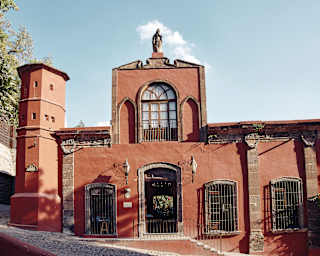
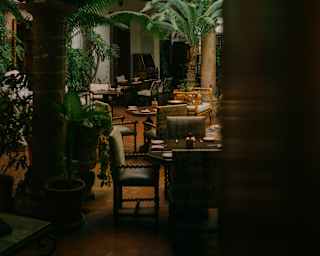
Timeless beauty welcomes you in Casa Principal. Visit Andanza, our main restaurant located in Calle Hospicio and discover our Cava room. It has a staircase that goes down to what is now the cellar, but in another time would have led to a tunnel connecting the house with the church and other residences: a common feature in colonial homes.
Walking a little further to the back, you’ll spot a crowned stone shield attached to the wall on the lintel of one of the doors. It is divided vertically in two parts, the left one in turn is divided in two. It is detailed with a crenelated tower, along with a palm in the middle of two lions standing on their hind legs. There is also a cross surrounded by stars, and in the central part, two pots or bags for coins. This is the emblem of the hotel; a visual representation of our rich legacy.
Casa Principal
Casa Palma
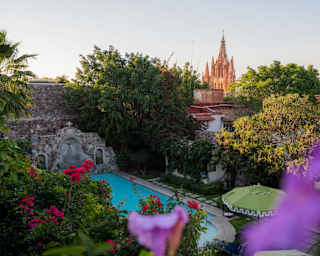
Feel embraced by the uniqueness of Casa Palma. Alongside the azure pool and immaculate garden, find many captivating details. Here, find decoration with motifs characteristic of the Hoovo-Hispanic baroque style, painted in an enrapturing red. At the back of the garden there is a circular stone piece with carved details that remind us of pre-Hispanic times before the conquest. There are carvings of crowned skulls showing ornaments made with small feather tassels, similar to those worn by ball game players.
The stone arches in front of the pool are reminiscent of aqueducts. They were built by our masons with stones recovered from the garden in the recent renovation in 2018. In this house you’ll also find the Presidential Suite, the best and largest room of the hotel. On one of its walls hangs an easel painting depicting ‘crowned nuns’. This type of painting was very common in the viceregal era, since almost every Creole family would have at least one daughter who entered the convent.
Casa Fuente
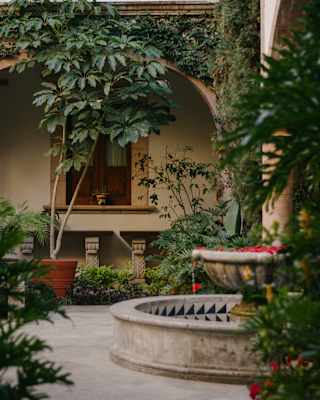
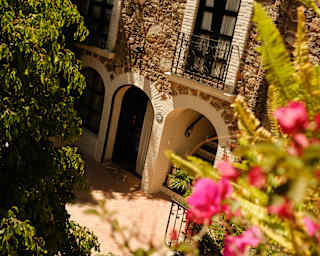
As you stroll through the main courtyard of Casa Fuente, take a moment to admire the exterior walls of the casa, where the architectural term “cal y canto” or “calicanto” is in full display. This construction technique, in which stones are joined together with mortar without any order or size, creates a stunning masonry that is truly a sight to behold. Exploring the greenery that surrounds the courtyards, discover several orange trees that produce the fragrant flowers of azahar, long revered as a symbol of love and devotion.
Within room 484, the door that leads to the bathroom is different from all other doors of the hotel. It’s formed of two wooden panels, with a Gothic ogival style frame. On the sides facing the interior of the bathroom, each door is divided into six parts and each part is decorated with paintings of female saints or martyrs, recognized by their holding a palm leaf which is the symbol of victory over death. On the side facing the room there are characteristic baroque motifs intertwined with a selection of female faces.
Casa Fuente
Casa Caballo
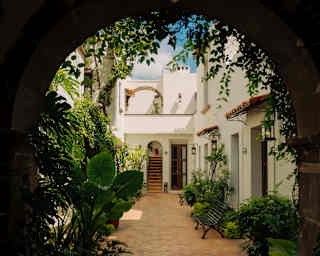
Be captivated by enchanting details in Casa Caballo. Local legend says that the Casa received its name because the building originally housed the horses of travelers to the city. For this reason, you’ll find horses represented in different areas of the house. Admire the roofed space, the so-called Catalan vault. It allows the entrance of lantern light, illuminating the metal sculpture of a horse positioned on a wooden table. On the right wall of the main courtyard there is a plaster relief depicting the “Tree of Good and Evil”. It shows an apple tree with the fabled snake that tempted Adam and Eve. At the end of the main patio, you’ll find the wooden sculpture of a horse carved to mimic those found on a carousel. On the second floor, the handles of the entrance doors are formed in the shape of equine heads.
Casa Caballo
Casa Parque
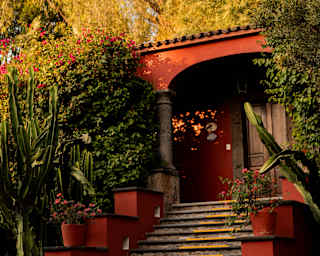
Discover our majestic Casa Parque, located across from the iconic public Lavaderos. Just down the stairs leading to the memorial site, this mansion built in the “fortress” style of the Colonia is an impressive example of the architecture of the period. The buildings surrounding Casa Parque have been painted red to give a sense of unity and cohesion to the area.
Locals tell that the house was once home to a Spanish family named Lanzagorta, who were in charge of collecting, receiving and storing both precious metals and grains that were part of the Quinta Real and the Diezmo. Adorning the terrace overlooking the garden, we can see a large millstone, marked by years of continual use. Heading down to the garden and our indoor event venue you’ll find elaborate sculptures of two seated lions. They are a symbol of power, strength, courage, royalty and dignity.
Casa Parque
Casa Limón
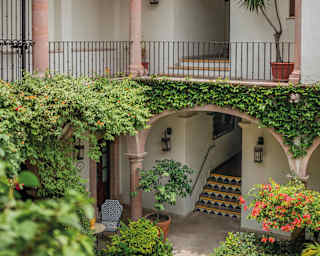
This special house is a listed site by the INAH, the National Institute of Anthropology and History. It was acquired and restored in the late 60’s by Mr. Jorge Palomino, the founder of the hotel. Like many of the constructions of the colonial period, its walls are very wide and the spaces are gemmed by skylights.
Historically, it’s said that houses that had fountains belonged to wealthy people, since water was scarce. The fountain at the entrance has been decorated with hand-made artisanal ceramics from Guanajuato. Some of the ceramic was also used for the sinks in the guest rooms. The fireplaces are decorated with hand-carved stone depicting floral motifs. These imitate the Tequitqui style; the artistic manifestations of the indigenous people of the Mesoamerican area after the conquest of Mexico. The style shows that during the height of evangelization, indigenous communities treasured their beliefs and traditions.
Casa Limon