It’s a global phenomenon: increasingly, 21st-century consumers want traceable foods they can trust. The locavore – the locally-produced food movement – has its equivalent on Mallorca, where there has always been some classy produce. The Slow Food organisation, which has a chapter here, has also brought about a renewed awareness of unique local varieties such as the Mallorcan red sheep – from which a superb raw-milk cheese is made by Llorenç Payeras in Lloseta – and xeixa wheat, brought back into widespread cultivation by Pollença-based bakers Tomeu Morro and Biancamaria Riso. There has, too, been a surge of interest in island-made olive oils. As of this year, Mallorca finally has its own Denominación de Origen for olive oil, signalling the triumphant return of a product made on the island since the Arabs first planted olives here in the 10th century.
Mallorca is often described as more like a continent than an island, such is its variety in landscapes, from the olive groves of the Tramuntana mountains to the fertile agricultural land of Sa Pobla (home of the increasingly popular Sa Pobla potato) and the salt flats of Es Trenc. Varied geography means varied produce and the range of island ingredients would make for a groaning kitchen table.
What would I single out, then, among all this Balearic bounty? Certainly the sweet, oil-rich Marcona almonds and the luscious apricots of Porreres, in season during early summer. Also the figs and melons, the sunshine-bright and sensationally scented Sóller lemons, the ramallet tomato – typical of the island, often seen hanging in bunches to last throughout the winter – and the paprika-like ground red pepper from the once-rare Tap de Cortí variety. In another tale of rescued food, a German businesswoman has revived the artisan process of salt-making on the island to produce Flor de Sal d'Es Trenc – some of the finest sea salt to be found anywhere. I can never leave Mallorca without a tub of Flor de Sal – either au naturel or in a range of flavourings including lemon and chilli, black olive or hibiscus.
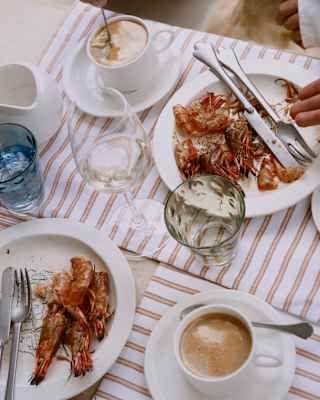
As you’d expect from a Mediterranean island, the fish and shellfish here are the best and the king of local fish counters is surely the Sóller prawn. There is nothing in the world quite like this deep-red, juicy prawn, best served a la plancha (grilled) and sprinkled with flakes of Es Trenc salt.
But if there's a single speciality central to the island's culinary identity, it has to be ‘sobrassada’. No self-respecting Mallorcan fridge or larder is complete without the bulbous shape and buff orange colour of this unique sausage, ideally made from ground pork meat from the ‘porc negre’ (black pig) breed, generously spiced with ‘pimentón’ for a pungent flavour.
‘Sobrassada’ is commonly eaten alongside country bread rubbed with tomato and drizzled with olive oil – the Mallorcan favourite ‘pamboli’ (literally 'bread with oil') – or spread as you might a paté on the salty biscuits made by Quely. Island chefs use ‘sobrassada’ in sauces or as part of a stuffing – I’ve even seen it grilled in thick slices and drizzled with honey.
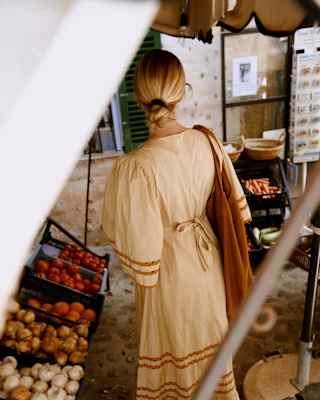
Recently I returned to Mallorca, whose charm never fades despite its increasing sophistication. I found Palma prettier than ever, its streets cleaner and more prosperous, with chic restaurants and smart hotels. Always a fan of the food markets, I headed to the Mercat de l’Olivar with its kaleidoscopic view of everything that is best in Mallorcan produce, from ‘porc negre’ to Es Trenc salt. But I found there was a new contender for my foodie cravings.