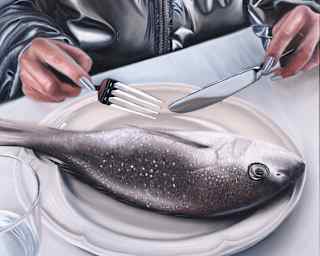
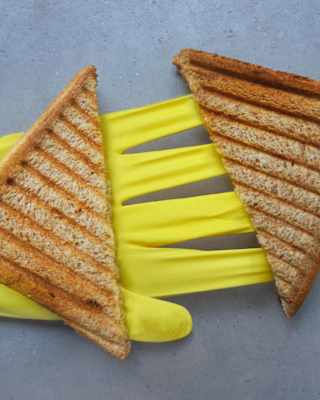
When you look at the barbed petals of an artichoke or the electric arch of a boiled lobster’s back, it’s easy to see why artists have always been enamoured by the absurdity of food. From Wayne Thiebaud’s pastel-coloured cakes to Yayoi Kusama’s polka-dot pumpkins, it has been both a medium and a topic for artists for hundreds of years – none more so than the Surrealists in the early 20th century.
There’s Dorothea Tanning’s animated poached trout and René Magritte’s famous apples as faces, but it was Salvador Dalí who brought meals to life like no other. Stemming from an early desire to be a chef, Dalí published Les Diners de Gala, a cookbook dedicated to his beloved wife Gala, at the height of his fame in 1973. Its 136 recipes are illustrated by the artist, with chapters that cover everything from nocturnal cravings to aphrodisiacs. Each recipe is matched with Dali’s eccentric musings that include “I only like to eat what has clear and intelligible form” and “taste while the cicadas are singing in the hottest part of July”.
Now, though, the most surreal visions of food that we see are not played out on paper or canvas. When the American conceptual artist Jennifer Rubell created an interactive installation at London’s Saatchi Gallery for an art-world wedding in 2010, the walls between what is food and what is art came crashing down. The de Pury Diptych was a decadent feast piled on 67 white linen beds, every element designed to be consumed.