Histoire

The Cinema of Sicily

4 min read

Auteur

Belmond Editors

With its mix of bucolic villages and bustling cities, Sicily has often found itself in front of the camera’s gaze.We take a whistle-stop tour to discover the island’s celluloid offerings.

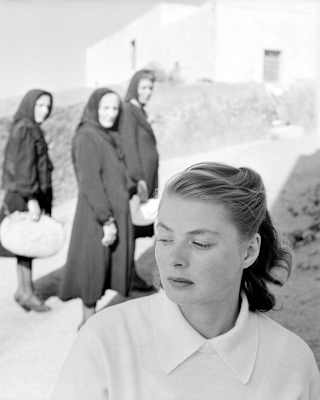
A still from Rossellini's film, Stromboli, shows Ingrid Bergman looking uneasy as she is watched by three local women.

Stromboli (1950)

ABOVE

Ingrid Bergman in Stromboli (1950), directed by Roberto Rossellini

A delicate Ingrid Bergman struggles to assimilate to the wild landscape in Roberto Rossellini’s Stromboli, which takes its name from the volcanic island a stone’s throw north of Sicily. A classic of Italian neorealist cinema, it also provides a glance into the rural fishing communities of 1950s Sicily – though the camera is more in love with Bergman’s face above anything else (fitting, considering the scandalous love affair between Rossellini and Bergman that began during filming).

The Godfather Trilogy (1972, 1974, 1990)

“In Sicily, women are more dangerous than shotguns.” Al Pacino’s Michael Corleone doesn’t heed this warning when he falls in love with local beauty Apollonia in the first instalment of The Godfather, and he pays the price. Whether it’s to visit the San Nicolò church – the location of his doomed wedding – or Bar Vitelli, where he first enquires about her (still famed today for its lemon granita), Savoca in Sicily is a mecca for fans of Francis Ford Coppola’s mafia movie. Beyond the walls of this historic town, scenes from the three films were shot all over the island – from Acireale to Palermo, Messina, Catania and beyond. Leave the gun, take the cannoli.

Il Gattopardo (1963)

BELOW

Luchino Visconti directing Burt Lancaster and Claudia Cardinale on the set of The Leopard, 1963. United Archives GmbH
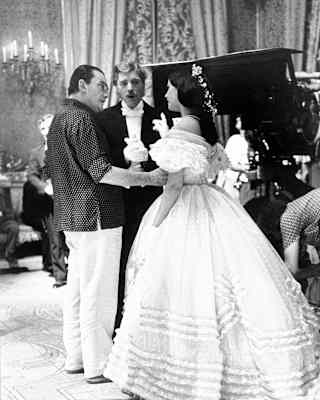
Known for his large-scale epics about the moral decay of Italian aristocracy, Luchino Visconti’s Il Gattopardo sees its characters grapple with political upheaval in the mid-19th century as Sicily as they know it crumbles around them. Burt Lancaster, Alain Delon and Claudia Cardinale are the taffeta-and-organza-laden actors caught in the middle. While it was considered controversial at the time for the way it depicted the Risorgimento period of Italian history, today – with its sweeping, intoxicating production design – it's considered by many to be a classic.

Visconti talks to Claudia Cardinale, who wears a white frilled dress, watched by Burt Lancaster on a film set, in monochrome.

Cinema Paradiso (1988)

A sentimental ode to the power of cinemagoing, Cinema Paradiso won the Academy Award for Best Foreign-Language Film in 1989 and is still one of the most beloved Italian films today. Shot in Bagheria and Cefalù on the northern coast of Sicily, it is shown largely in flashback as a jaded adult reflects on his childhood growing up in a small Sicilian town, where his only source of joy is the local picture house. It’s best remembered today for its epic music score by the Italian maestro, Ennio Morricone.

L’avventura (1968)

BELOW

Monica Vitti and Gabriele Ferzetti on the set of L'avventura, 1960.
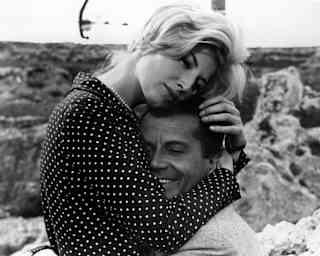
Season 2 of the hit HBO show The White Lotus was set in Taormina, and series creator Mike White was so taken by acting legend Monica Vitti’s most famous film, L’avventura, that he featured a shot-by-shot homage in the series, with Aubrey Plaza’s character also walking under the steps of Noto Cathedral. Vitti, known for her heavy-lidded, commanding gaze, was the muse of director Michelangelo Antonioni, and L’avventura is often considered her best work – a strikingly melancholic mystery film about a missing woman, and the ennui-laden search to find her.

Monica Vitti, wearing a polka dot shirt, embraces Gabriele Ferzetti in a scene from the film L'Avventura, in black and white.

The Day of the Owl (1968)

With her mesmerising, kohl-ringed eyes, Claudia Cardinale is one of Italy’s most beloved cultural exports. She may have made over 100 films, but The Day of the Owl captured her captivating beauty the best. The film is a leading example of the poliziotteschi Italian crime film movement of the late 1960s and is set in a small Sicilian town where a police chief is investigating a murder, only to have his efforts frustrated by the presence of the mafia and the culture of silence. Filmed in Partinico, art soon began imitating life on set, as the production team were intimidated with threats during filming – thought to be sent as a result of the film’s intimation that the Italian government were in cahoots with the mafioso.

Divorce Italian Style (1961)

BELOW

Marcello Mastroianni in Divorce, Italian Style, 1962.
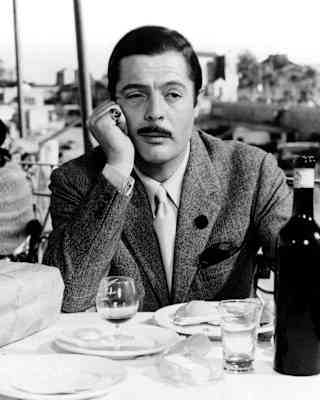
An impish Marcello Mastroianni lit up the screen in this frothy black comedy about a man who, despondent that divorce is illegal, gets creative in imagining a series of extreme ways to do away with his wife. Poking fun at the stereotypes of the fickle adulterer and slyly sending up old-world Sicilian morals, director Pietro Germi selected picturesque Ispica in the south of the island to set the action, making use of its stunning Baroque architecture and sloping scenery.

Marcello Mastroianni sits a table with wine overlooking a harbour in Sicily, taken from the film, Divorce Italian Style.

The Seduction of Mimi (1972)

Lina Wertmüller was a rare example of a woman flourishing within a predominantly male filmmaking sphere in the 1970s, and she made history being the first woman – of any nationality – to be nominated for the Academy Award for Best Director. The Seduction of Mimi, which follows the trials and tribulations of a Sicilian labourer, is considered one of her finest works. It was filmed in Catania and provides a compelling tour of the city, from the Piazza Ognina to Monastery of San Nicolò l'Arena and the historic Via dei Crociferi.

IN THIS STORY

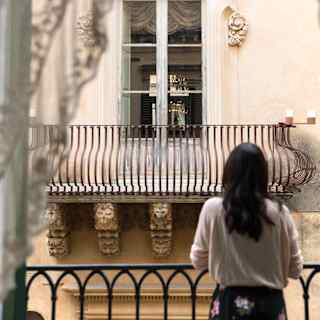
Lady at a Juliet balcony gazing across to a Juliet balcony opposite

In the Footsteps of Francis Ford Coppola

Sicily Cinema Tour with Belmond