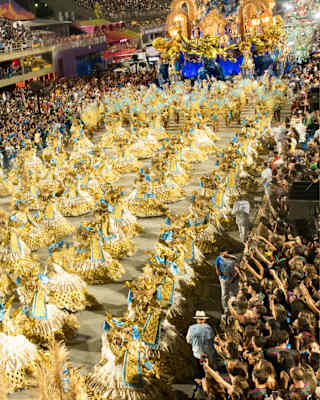
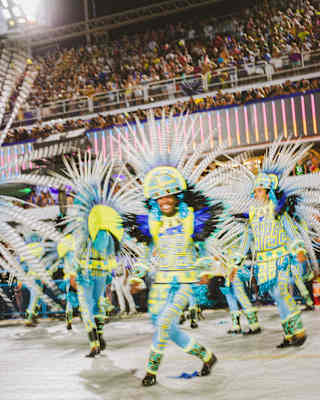
This exhilarating atmosphere of community and togetherness dates all the way back to 1723, when the first Rio Carnival took place. Each year, dancers, musicians and carros alegóricos (decorated floats) take to the streets, led by approximately 200 samba schools. These groups are formed by various Brazilian communities, who practice year-round. The top twelve samba schools have the added pressure of competition, with the winning squad being crowned the number one samba school in Rio.
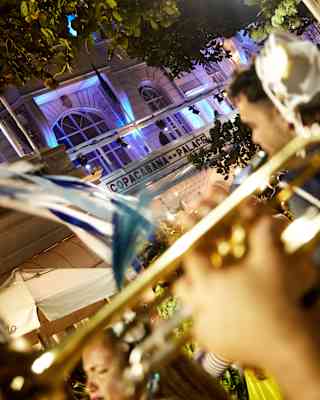
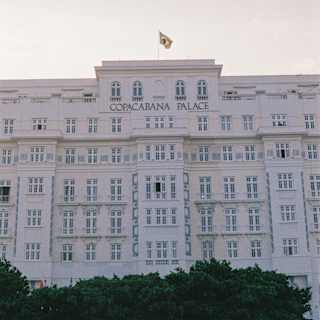
The first of these schools formed in Rio in the 1920s, around the same time that the iconic Copacabana Palace hotel swung open its doors. Samba first began to emerge in Western consciousness in the 1940s, thanks in part to Carmen Miranda’s iconic roles in films such as That Night in Rio and The Gang's All Here. However, the infectiously rhythmic dance has roots that developed far earlier. Differing from ballroom samba, Brazilian samba was created by former West African slaves that were brought to Brazil during Portuguese colonisation.
Influenced by Angolan and Luso-Hispanic music genres, it pulsates with an infectious rhythm and reflects the carnival’s spirit of conviviality. What’s more, it symbolizes samba schools’ united pride under a common regional background. The dance’s ethos of spiritual emancipation, set to the liberating backing of the bateria (a drum orchestra), is the perfect dance to accompany the joyous parades. United and moving, under the blazing Brazilian sunshine.