Geschichte

Go with the Slow

5 min read

Geschrieben von

Monisha Rajesh

Monisha Rajesh – author of four travel books including ‘Moonlight Express: Around the World by Night Train’ – discovers why slow travel is having a resurgence.

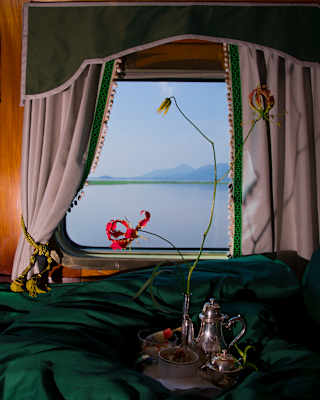
A tray with a silver tea set rests on a green duvet adorned with a flame lily that stands out against the misty window view.

Ten years ago, the romance of railway travel appeared to be fading as a mass cull of sleeper trains made way for budget airlines and high-speed rail. But who knew the world was going to shut down? After the pandemic, many travellers began to reassess the way in which they moved through the world. Some feared the close proximity on aeroplanes, choosing instead to spread out in private train compartments, enjoying the space and fresh air flowing through open windows. Others, confronted by the reality of climate change, accepted that while the damage can’t be undone, steps can be taken to mitigate the effects by flying less and exploring closer to home with sustainable travel by train. In 2023, pan-European operator Interrail saw a consecutive record year in ticket sales, as travellers rediscovered the charm of slowing down and the ways in which railways allow those on board to take note of everything: from the rise and fall of the passing landscape to the stresses weighing on their minds.

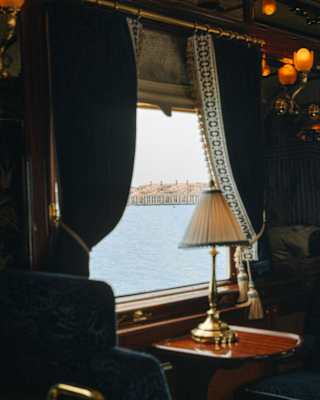
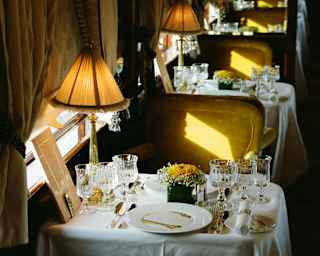
At a bar car window table with a lamp and velvet seats, hemmed blue curtains are hooked back to reveal wide water views.

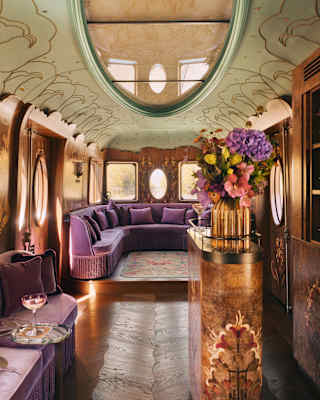
Last year, I set off on the Eurostar from London to Paris with the intention of retracing the Golden Age route to Istanbul on a series of trains that would take me via Vienna, Bucharest and Sofia. I’d twice had the delight of spending a night on Belmond’s Venice Simplon-Orient-Express, a fabulous luxury rail journey driven by nostalgia for a bygone era. The train sailed past the glittering waters of Venetian lagoons and thundered along vineyards, crystal clinking on white linen as we dined on chicken oysters and Oscietra caviar, the smell of polished mahogany heavy in my private suite.  

Contrary to popular myth, the train was never solely a luxury service, but a regular passenger train made up of several sets of rolling stock. Inspired by my journey on the Venice Simplon-Orient-Express, I spent the last few days clattering towards Istanbul on regular services, meeting everyone from students and carers to musicians and human rights lawyers. The trains were full; sleeper cars booked up. It didn’t take long for conversation to spark as tips were shared about restaurants and life stories were swapped, everyone emboldened by the anonymity unique to train travel as passengers hopped on and off. Making my way across Europe, I could picture passengers on the original route, travelling through the shadows of the same forests, crossing the River Danube and arriving to the same outlines of Istanbul's hills and minarets, their points like sharpened pencils against the dawn sky.

Trains give me the gift of time and freedom, along with a firm feeling of place. Long-distance journeys are perfect for reading books cover to cover, writing in a diary, sketching or playing games of cards. Offline, I find peace, glancing up to watch streams grow into rivers, mountains rise and recede. Seated at a train window, cup of tea in hand, I watch villages flit past, children playing makeshift games of cricket or lovers stealing a kiss on a walk. Trains reveal the in-betweenness of the land: the clusters of forests haloed with mist; the molten surface of a lake at sunset; the sole farmhouse in a field of golden corn.
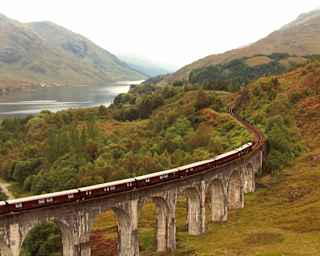
Aerial view of The Royal Scotsman as it crosses the Glenfinnan Viaduct on a damp and misty day, with views of Loch Shiel.

Over the last couple of years spent chatting to my fellow passengers, it became clear that travellers are starting to opt for immersive experiences over fly-and-flop holidays. With a single ticket for a luxury train, passengers can often find all of the above. One warm spring morning off board the Royal Scotsman, another Belmond train, I spent an hour shooting clays on the Rothiemurchus Estate in the Cairngorms National park, while others fished for trout or trudged through ancient woodland, inhaling the freshness of native pinewood. There was whisky-tasting at the Strathisla Distillery and the pomp and splendour of an onboard black-tie dinner as the train wound around clifftops in the moonlight, the salt air from the North Sea whipping through the windows.  

As a society, we’ve become obsessed by speed – bolting for the Metro on the morning commute, building bullet trains and faster internet so we can constantly consume on the go – yet what do we do with the extra time we’re saving? If speed is improving our lives, then why do our days feel busier, longer and harder, our minds overburdened and tired? For me, the slowness of train travel presents time to pick apart my thoughts, the thump of the wheels lulling me into a meditative state of calm as I either forget the hassles back home or learn to make peace with them. All it takes is the blooming colours of the Peruvian jungle or the wildness of the Scottish glens to remind me that life is greater than the tedium of daily existence.

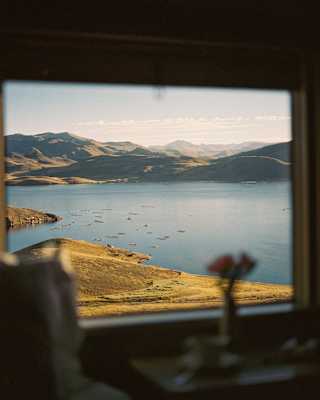
View of Lake Titicaca, surrounded by undulating hills, kissed by golden morning sun, seen through a cabin window.
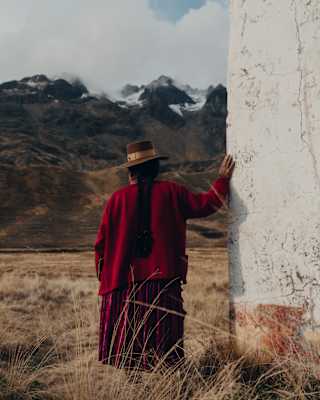
A woman in a red clothing and a brown hat rests her hand on a white wall, with a snowy mountain backdrop, seen from behind.

Last year, on board Belmond's Andean Explorer train, I spent most of the journey looking over the railings of the train’s observation deck, pisco sour in hand as we weaved through the high Andes. It was from this vantage point that I could best smell the eucalyptus trees lined along the route – their oily wood imported from Australia to build railway tracks and homes. On the descent into the Sacred Valley, I learnt about ‘andenes’, the terraced slopes stepped above the tracks which the Incas had ingeniously developed to create microclimates. These agricultural innovations were then used to foster the production of hybrid grains and crops, which Belmond’s guests could then sample during dinner for an entirely holistic taste of Peru. It was on that observation deck that friendships grew between passengers from the Philippines, Missouri and Paris.

It seemed that once travellers experience the romance of the world’s railways, they only want more, going in search of new and ever-more thrilling ways to slow down together.

BOOK YOUR STAY

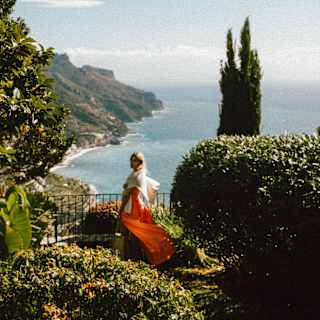
A blonde woman in a white top and breeze-blown orange skirt stands at a viewpoint in gardens overlooking the dramatic coast.

Discover a New Pace of Travel

Author

Monisha Rajesh is an author and journalist whose writing has appeared in Vanity Fair, The Guardian, The Sunday Times and The Sunday Telegraph in which she wrote a monthly column about travelling the world by train. Her first book Around India in 80 Trains (2012) was named one of The Independent’s top ten books on India. Her second book, Around the World in 80 Trains (2019) won the National Geographic Travel Book of the year.