To The Market
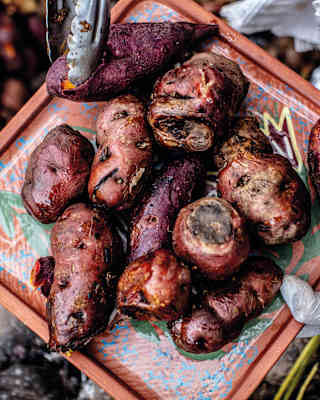
Once just a stepping stone for visitors to Cusco and Machu Picchu, Lima has become the country’s gastronomic hub. With the Andes and the Amazon both only an hour’s flight away and the coast on its doorstep, there’s a huge range of produce available and guests at Miraflores Park can explore the chefs’ favourite market, Surquillo, on a gastronomic tour. Stalls are piled high with gaudy fruit—pitahaya, which purports to cure all ills; creamy, nutty-flavoured lucuma; and chirimoya, a sweet cross between a banana, peach and pineapple—potatoes of every shape and size, and rainbow-hued corn.
Ricardo Ehni, chef at Miraflores Park, says: “This market focuses on suppliers that specialise in fresh, organic produce from the coast, highlands and rainforest, demonstrating the country’s enormous biodiversity. Epicureans and food lovers will be amazed by the colours and textures of the fruit and vegetables, and they can even choose their own ingredients and learn how to cook them back at the hotel.”
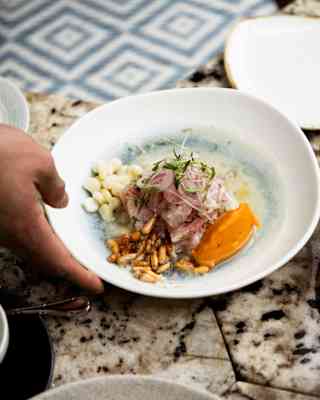
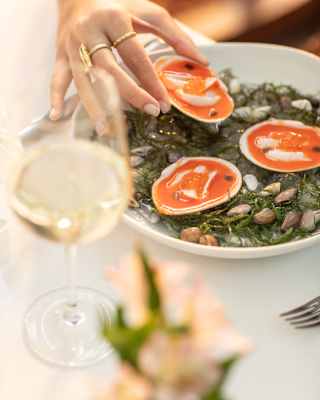
Peru has some of the most abundant fishing grounds in the world, thanks to the icy Humboldt Current that runs along its Pacific coast, which is why seven days a week, starting at 4am, the raucous cries of fishermen fill Lima’s Villa Maria market, as they hawk everything from swordfish to sardines, and dexterously fillet the day’s catch. It’s also one of the reasons that Japanese chefs—including the legendary Nobu in the early 1970s—were drawn to Peru, creating Nikkei, a Peruvian-Japanese fusion of ingredients and techniques in dishes such as tiraditos, delicate slivers of the just-caught raw fish, like a cross between sashimi and carpaccio.
The Inca economy was based on farming and the fertile, undulating, evergreen Andean valleys still produce the same ingredients: tubers—there’s said to be as many as 3,000 varieties of potato—corn, high-altitude grains such as black quinoa and amaranth, tarwi beans (traditionally peeled by donkeys treading on them), trout, llama, alpaca and guinea pigs.
More than just a sacred site, Machu Picchu’s agricultural terraces and crop stores have revealed that produce was also central to Peru’s spiritual life, while at the less-visited Inca site of Moray, easily explored from Rio Sagrado, the Incas carved three enormous amphitheatre-style pits out of the earth. The temperature between the bottom and the top can vary by as much as 20°C and many researchers believe that it was the site of sophisticated agricultural experiments.
In Cusco’s colourful San Pedro market, fedora-clad Andean women sell bottled snakes, dragon’s blood and gnarled maca root—the Andean answer to ginseng. Nothing goes to waste: platters of pigs’ trotters and cows’ noses sit next to unidentifiable innards and jars of intestinal juices. Regional specialities include pink salt from the Maras pans—ancient terraces fed by mountain water—and chuño, potatoes that resemble small white pebbles after being freeze-dried in the cold mountain air.