Taste Travel: Venice

Author

Valeria Necchio

Photography

Anna Jay

4 min read

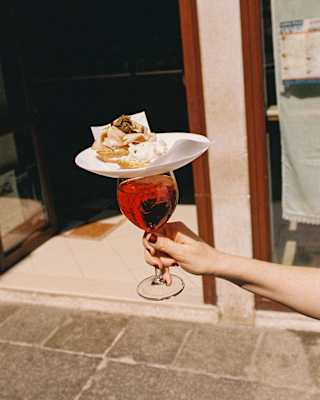
A plate of a cicchetti pastry treats rests on the top of a glass of iced Aperol, carried in a Venice street, seen close-up.

Venice’s culinary traditions are intertwined in its history and geography, strongly defined by the water that surrounds it. Food writer and Venetian local Valeria Necchio explores this unique terroir that blends land and sea.

Venetian cuisine. Where does one begin? I sense my judgement is impaired by a combination of memory, proximity and tenderness; by a sheer love for the flavours I’ve grown up eating, and by a fascination with a subject matter that has always felt too vast to grasp.  

Perhaps I should begin by fetching a map. I encourage you to do the same. Look at the shape of the city-island and you’ll find your first clue as to what it’s all about. Do you see something resembling a fish? Indeed, it’s a fish bathing in brine – a lagoon – that, as it turns out, both preserves and marinates it. Venice owes its very existence to its interaction with, and creative exploitation of, this unique ecosystem. Of how crucial this dialectic between land and water, human and nature, is to the dietary sustenance and culinary imprint of Venice, we’ll talk in a moment.  

Perhaps I should gaze at the architecture: at the shape of certain windows or Levantine style domes; at the flickering light of the Byzantine mosaics. Because as I stroll down the narrow alleys – the calli – with my nose up, I swear I can smell spices. If you believe that to talk about food is to talk about life, then to talk about the culinary heritage of Venice is to talk about the intersection of its history, anthropology, morphology, politics, economy and tangentially the people who have contributed to creating it over time and continue to do so today. 

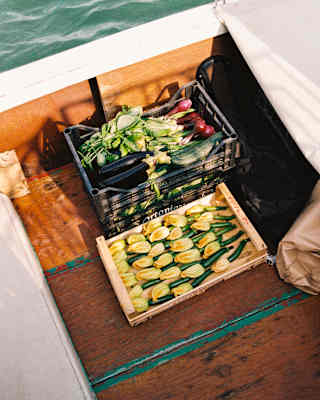
A waterborne boat carries two crates in its hull, one with zucchinis and flowers, the other with red onions, seen from above.
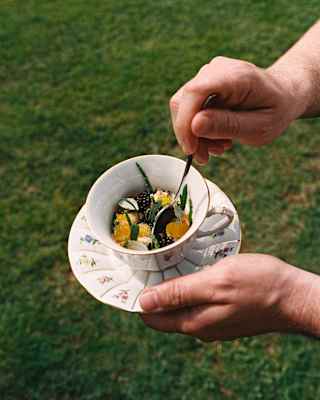
A diner digs a spoon into a dainty teacup of Oro's Lagoon dish, with mussels, caviar, blue crab, bottarga and sea fennel.

It would be impossible to understand why Venetian cuisine is the way it is without looking at the environment surrounding the city. Since its foundation, the aquatic landscape of the lagoon has offered Venetians a variety of advantages: protection from invasions; abundant sustenance in the form of fish, game and wild edible flora; and, crucially, salt. Cultivated vegetables and fruits grown on the most fertile islands – Mazzorbo, Torcello, Sant’Erasmo and Le Vignole, to name a few – supplemented the diet of the many, arriving at the Rialto Market then as they do now (except boats didn’t use to have a motor), filling the stalls with prime, plump produce. Later, trading activities with the Mediterranean, the Middle East and the Far East introduced new ingredients, such as spices and nuts, into the diet of the wealthy few. Later still, grains such as corn, rice and wheat entered the city from the main land dominions of La Serenissima. 

The resulting cuisine is unlike any other in Italy: a synthesis of land and water, urban and rural, local and foreign, high and low. Marinades such as the celebrated saòr, used both as flavouring and preservative for fish and vegetables. Rice dishes served all’on da (wavy) and laced with a rotating variety of seasonal vegetables, including violet arti chokes, wild hop sprouts and foraged herbs. Squid-ink stews, rich braises, spiced sauces to season seafood. Musky octopus, rissoles resolving the meal with the previous day’s leftover fish or meat. Stockfish prepared in all fashions, from creamed to long-braised. And then pumpkin, onion, beets – all gaining that unique flavourfulness from the salty soil. 

These are dishes that have travelled from far back in time and have arrived in the present day, both in the form of cicchetti – bitesize portions served on a slice of bread or on a small plate with a goblet of wine on the side – and as full courses. Alongside them sits a series of more recent classics, with perhaps the most recognised by international crowds being the Bellini, an aperitif best enjoyed during white peach season, allegedly conceived at Harry’s Bar and perfected at the Hotel Cipriani. Today, you can sample them as you stroll through the seasonal herb and vegetable gardens on the grounds that inform the menu at restaurant ORO under Head Chef Vania Ghedini.

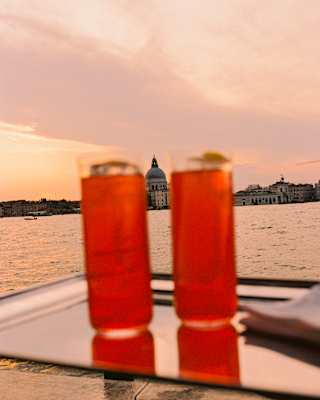
Two tall orange drinks sit on a tray in soft-focus foreground, in a view over a canal, waters peach beneath a sunset sky.
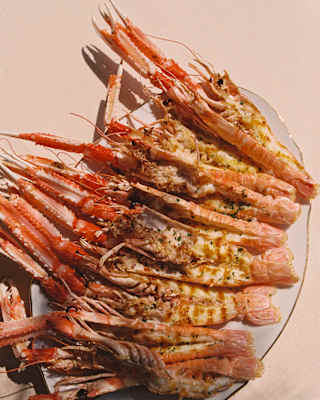
Looking down on a dish of eight butterflied and grilled langoustine with claws and tails, served at Cip's Club.

Venice’s food scene now reflects a complex personality, holding on to the old while still remaining current. It is, in a way, a city of many layers. A city facing challenges due to both environ mental change and also economic factors, not to mention the overwhelmingly high ratio of visitors to residents and, as a consequence, the nagging proliferation of tourist traps dishing out microwaved lasagne. But I won’t talk about these challenges, not today.  

Today, I want to celebrate what makes the culinary culture of this place meaningful and transferable; what contributes to its rootedness; what challenges its assumptions. There are many such examples – market stalls, delis, fruit and veg shops, pasticcerie, osterie, restaurants and wine bars – where history and atmosphere meet an active engagement in preserving Venetian food culture against all odds, supporting one another in a shared quest to remain relevant and, incidentally, in business. 

Among the many reasons to visit the city, the exploration of its fervent food scene ranks high on the list, whether one opts for the classic and traditional or the contemporary and experimental: there is something to suit everybody’s whims, and the key, as is often the case with regional Italian cuisine, lies in the freshness of the ingredients, the curated offering and the clean, simple immediacy of the flavours. This is the facet of the local culinary culture I wish everybody would see, fall in love with and spread the word about, saying, with an expression that is a mixture of fondness and wonder, “You won’t believe the meal I had while in Venice.” 

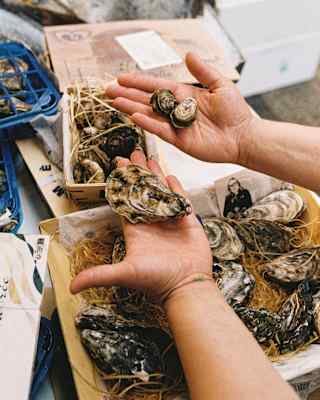
A person holds oysters in both hands above trays filled with more oysters and straw at a seafood market or stall.
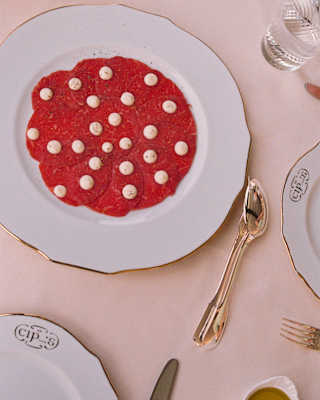
Looking down on stunning plate of Carpaccio dotted with Cipriani's traditional signature sauce, served at Cip's Club.

In This Story

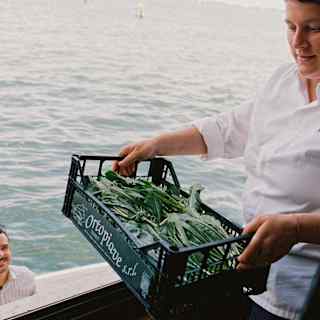
Chef Vania Ghedini lifts a crate of fresh greens through a hotel window, delivered by a boat visible on the canal below.

Taste Travel: Venice

YouTube

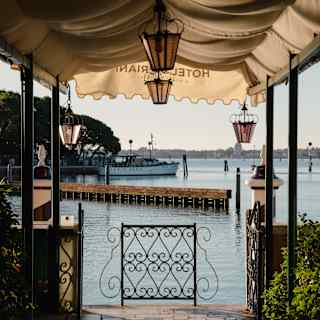
Looking from beneath the canopied entrance of Hotel Cipriani to a wrought iron fence at the canal's edge.

Hotel Cipriani

Venice, Italy

Author

Valeria Necchio was born and raised in the Venetian countryside of Northern Italy. Her work has appeared in Monocle, The Guardian, The Art of Eating, National Geographic Traveller, Italy Segreta, Financial Times and D di Repubblica, among others. Her debut cookbook, Veneto, a recipe book and memoir about the food of her origins, was published by Faber in 2017.